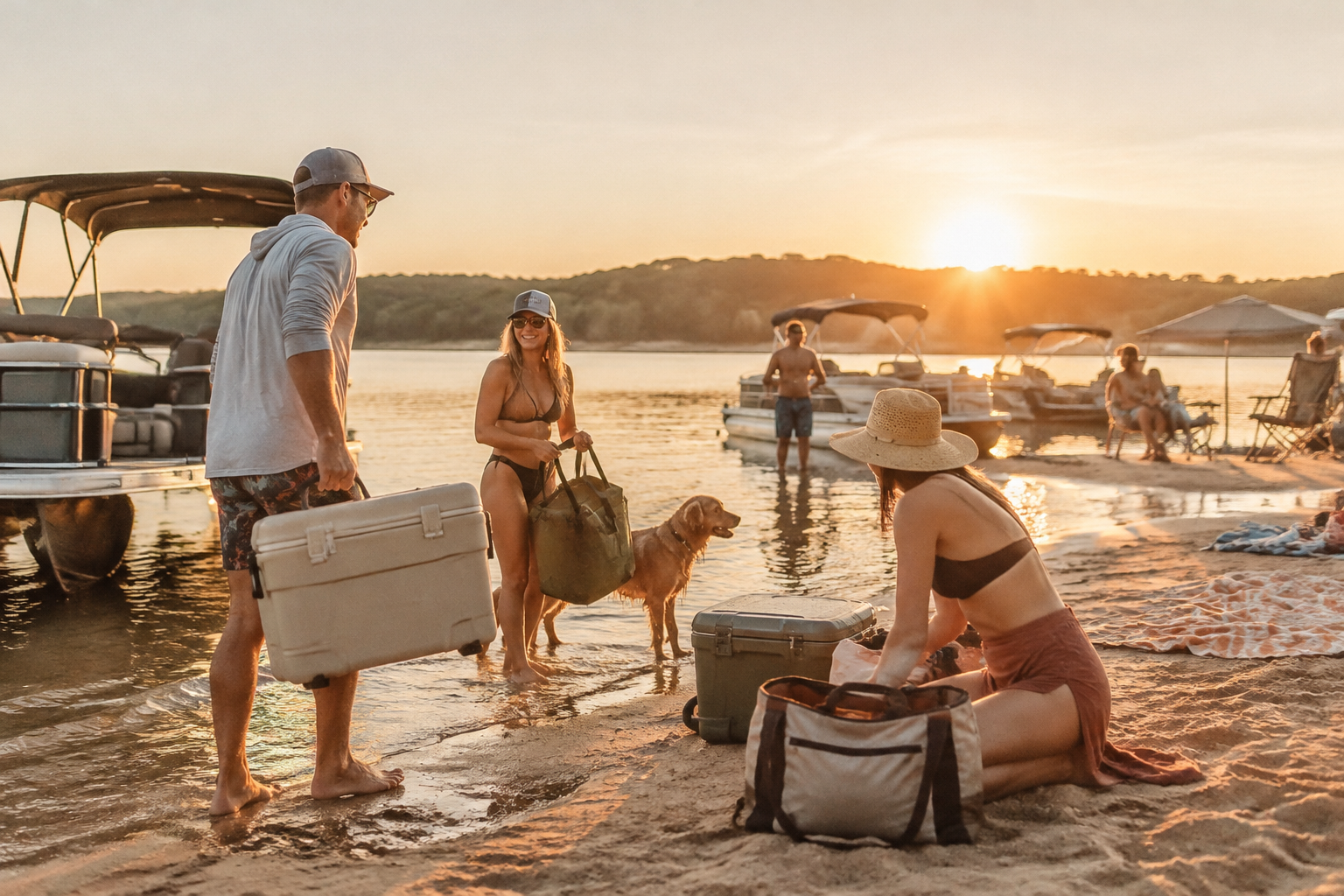
Good sandbar etiquette starts with how you pull up
Pull up slow, leave some room, and be the crew people are glad to have anchored next door.
Sandbar Rodeo Crew · October 27, 2026 · 5 min read
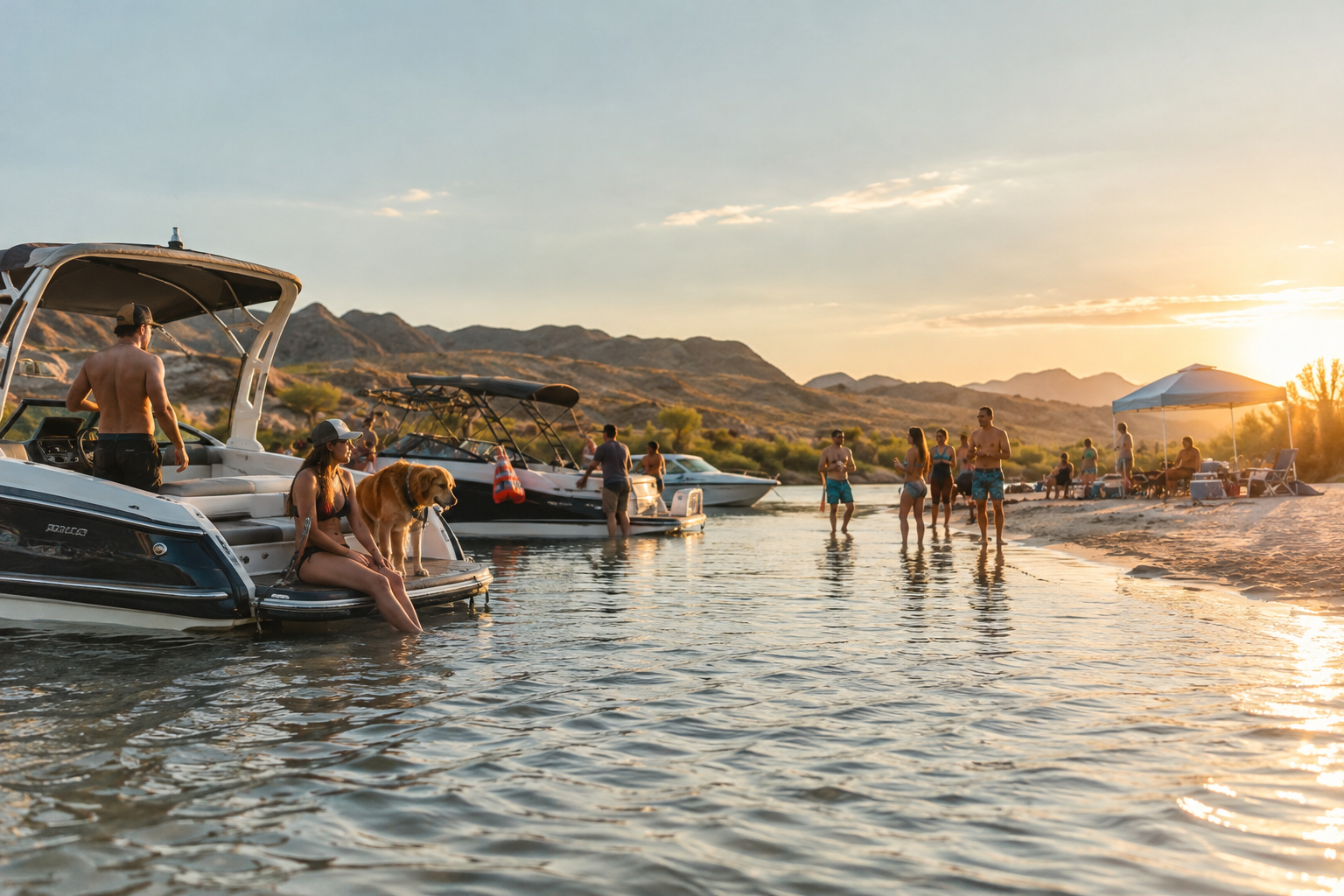
You can tell a lot about a crew before their cooler opens. It’s in the speed they carry toward the sandbar, the room they leave the next boat, and whether somebody has a line ready or everybody is watching the captain figure it out alone. Good sandbar etiquette starts on the approach. Get that part right, and you’re already closer to being the boat people are glad pulled up next door.
Sandbar etiquette starts before you drop anchor
The best entrance is usually the quiet one. Slow down early enough that your wake isn’t still rolling toward anchored boats after you’ve backed off the throttle. Follow posted restrictions, but don’t treat a sign as the only reason to ease up. Swimmers, paddleboards, loose gear, and folks standing knee-deep deserve some room.
Take a slow look before picking your spot. Where are people swimming? Which way are boats sitting? Is there an open approach, or are you about to squeeze through somebody’s afternoon?
- Watch the water. Depth, current, wind, and visibility matter more than how good a parking spot looks.
- Keep a lookout. Have someone help spot people, lines, and shallow patches while the operator stays focused.
- Leave an exit. Don’t block a channel, an access point, or another boat’s way out.
- Skip the forced fit. If the opening looks tight from a distance, it probably won’t improve up close.
A friendly wave is good. A quick “Mind if we set up over here?” is better when you’re getting close to another crew. Nobody owns the whole sandbar, but nobody needs a surprise neighbor three feet away, either.
Know how to anchor at a sandbar before you arrive
There isn’t one setup that works for every river, lake, boat, and bottom. Learning how to anchor at a sandbar means knowing your boat, using suitable ground tackle, and understanding the conditions that day. Sand shifts. Water levels change. Last weekend’s easy spot isn’t a promise.
Have the anchor and lines ready before the final approach, with loose rope clear of feet and the propeller. Give your crew simple jobs. One person handles the anchor, another watches clearance, and the operator keeps control. This is not the moment for five people to shout different directions.
- Choose room, not just depth. Account for your boat’s draft, changing water levels, and the space it may swing through.
- Set up for the conditions. Follow your boat and anchor equipment guidance for deployment and scope. Don’t shorten the rode just to squeeze into a crowded gap.
- Use the proper attachment point. Anchor from the bow; anchoring only from the stern can expose the boat to dangerous flooding.
- Check the set. Confirm the anchor is holding and watch your position against fixed landmarks before everyone settles in.
Keep everyone out of the water during close maneuvering. Shut the engine down before anyone enters the water near your boat, and keep swimmers away from other running boats. If you’re unsure about the setup, get instruction before the trip rather than improvising in a crowd.
Settle in without taking over
Once you’re holding securely, give the neighbors a little breathing room. Your boat needs space to move, and their crew needs space to enjoy the day without stepping over your gear.
Rafting up? Ask first. Agree on the plan, use adequate fenders and suitable lines, and keep hands and feet out from between hulls. Boats tied together create more load and need an anchoring plan that accounts for the whole group. If conditions aren’t right, hang nearby instead.
Keep floating mats, toys, and lines out of travel paths. Don’t run a line across a place people are using to walk or swim. Something obvious from your deck can be hard to see from water level.
If friends are meeting you, the Find the Crew Flag gives them something to look for. Send clear directions, too. “We’re beside the white boat” rarely narrows things down.
Keep the good time on your side of the boat
Music belongs at the sandbar. So does being able to hear your own friends talk. Start at a reasonable volume and remember that sound carries across water. Your favorite chorus doesn’t need to become everyone else’s afternoon.
The same goes for games, splashing, and wandering over to say hello. Read the room. Some crews want to meet everybody. Others came to float quietly with two friends and a bag of chips. Both have the right idea.
A few sandbar rules worth keeping, posted or not:
- Ask before boarding another boat or borrowing gear.
- Keep your trash contained, including tabs, wrappers, and bottle caps.
- Choose cans or reusable containers over glass.
- Respect shorelines, wildlife, private property, and local access restrictions.
- Offer help without turning somebody’s rough docking attempt into a show.
Different Boats. Same Sandbar. is a pretty good way to look at the crowd. Nobody needs the same boat, playlist, or weekend plan to be a decent neighbor.
Bring the basics that keep the day easy
Wondering what to bring to a sandbar? Start with the things you’ll miss most when they aren’t there: drinking water, sun protection, food, suitable life jackets, required safety equipment, and a way to pack everything back out.
Then add the small stuff that saves repeated trips through wet bags:
- Sunscreen, a hat, sunglasses, and shade where practical.
- A first-aid kit and any personal medications.
- Trash bags that can be secured against wind.
- A waterproof way to protect your phone and essentials.
- Footwear suited to the bottom, without assuming it makes every step safe.
A Rodeo Can Koozie can come along for whatever cold drink you packed. If alcohol is part of the day, designate a sober operator before leaving the dock. Keep water handy, eat something, and remember that sun and heat can wear people down fast.
Leave with the same care you pulled in
Good sandbar safety includes noticing when the day changes. Watch weather, current, water levels, anchor position, and tired swimmers. Kids and weaker swimmers need properly fitted life jackets and active supervision. Shallow water is still water.
Before departure, count your people, secure loose gear, and check that everyone is clear of the boat and propeller. Coordinate with rafted neighbors before releasing lines. Retrieve your anchor carefully, then leave slowly enough that your wake doesn’t undo somebody else’s setup.
The most useful sandbar boating tips aren’t complicated: pay attention, leave room, and handle your share. Take your trash, thank whoever lent a hand, and head home with the whole crew. That’s a good day on the water—and a crew worth pulling up next to again.
Gear up for the next sandbar day
Tees, hats, koozies and the flag — built for the water.
Shop the Drop